

WhatsApp:
+8618002618780
Manufacturing has always evolved alongside technology. From early mechanical production lines to today's connected and intelligent factories, every generation of industrial technology has changed how products are designed, produced, inspected, and delivered. Today, industrial automation is one of the most important forces driving this transformation. Modern manufacturers are under constant pressure to produce higher-quality products, increase productivity, reduce operating costs, improve workplace safety, and respond quickly to changing customer requirements. At the same time, manufacturers must manage challenges such as labor shortages, aging machinery, rising energy costs, supply chain disruptions, and increasing competition.
Industrial automation provides technologies that help manufacturers address many of these challenges. Programmable Logic Controllers (PLCs), Human-Machine Interfaces (HMIs), Variable Frequency Drives (VFDs), servo systems, sensors, industrial robots, machine vision, SCADA systems, and Industrial Internet of Things (IIoT) technologies are increasingly working together as part of connected production environments. Automation is no longer limited to large factories with highly complex production lines. It is being used across industries including food and beverage, packaging, automotive, electronics, textiles, pharmaceuticals, water treatment, chemicals, cement, steel, mining, oil and gas, and many other sectors.
In this article, we explore how industrial automation is transforming modern manufacturing, the technologies behind this transformation, the benefits manufacturers can achieve, and the trends that are shaping the future of automated production.
Industrial automation refers to the use of control systems, computers, software, sensors, machines, and other technologies to operate industrial processes with reduced manual intervention. In a traditional manufacturing environment, operators may need to manually control machines, monitor production parameters, inspect products, record data, and respond to process changes. Automation replaces or assists many of these activities through programmed control systems and intelligent equipment. A typical automated production system can contain several different technologies working together. A PLC may act as the central control device, receiving signals from sensors and sending commands to motors, valves, actuators, and other equipment. An HMI can provide operators with a graphical interface for monitoring and controlling the process. VFDs can control motor speed and torque, while servo systems can provide highly accurate positioning and motion control.
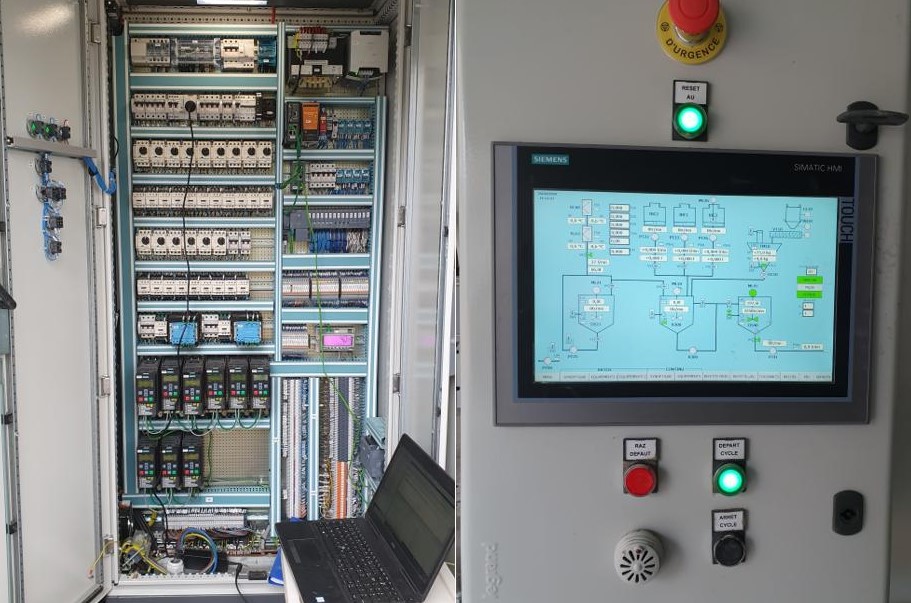
Sensors are another essential part of automation. They can detect temperature, pressure, position, level, speed, proximity, flow, and other process conditions. The information collected by these devices allows control systems to make decisions and adjust production processes automatically. Industrial automation can range from a single automated machine to an entire smart factory where machines, production systems, enterprise software, and data platforms are connected.
Major industrial automation technologies include:
Programmable Logic Controllers (PLCs)
Human-Machine Interfaces (HMIs)
Variable Frequency Drives (VFDs)
Servo Drives and Servo Motors
Industrial Sensors
Industrial Robots
Machine Vision Systems
SCADA Systems
Industrial Networking
Industrial IoT Platforms
Motion Control Systems
Leading automation manufacturers such as Siemens, ABB, Schneider Electric, Mitsubishi Electric, Allen-Bradley, Omron, and other technology providers offer solutions across these categories.
One of the most significant effects of industrial automation is the improvement of production efficiency. Manual production processes can be affected by fatigue, inconsistent working speeds, human error, and limitations on operating hours. Automated systems can perform repetitive tasks at consistent speeds for extended periods, helping manufacturers increase production capacity. For example, an automated packaging line can continuously detect products, move them through different production stages, fill or package them, inspect them, and transfer finished products to the next stage. A PLC coordinates these operations based on programmed logic, while sensors provide real-time information about the condition and position of products.
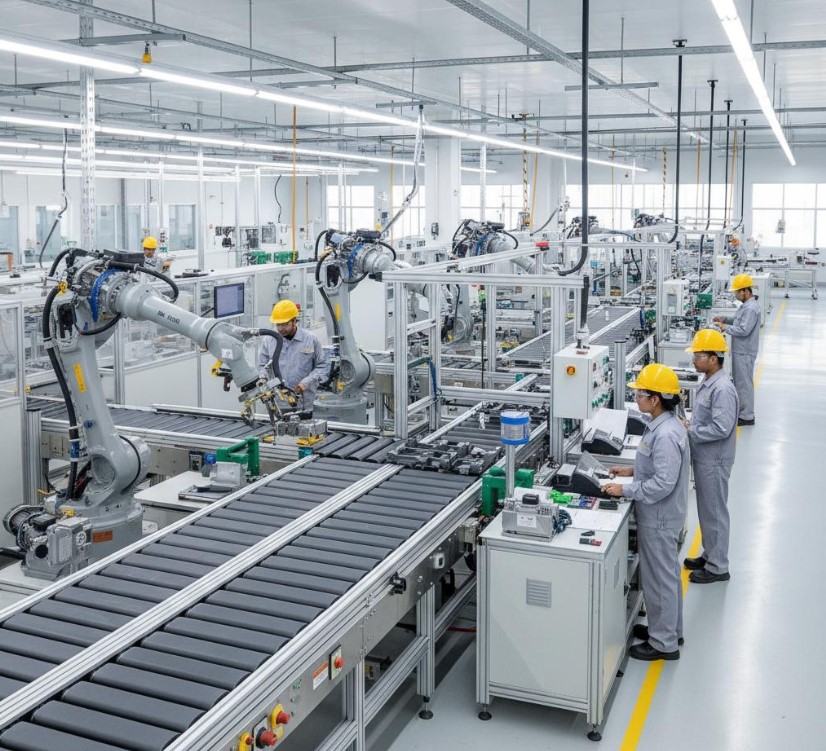
Automation can also reduce unnecessary production delays. When machines communicate with one another through industrial networks, production processes can be coordinated more efficiently. A conveyor can automatically start or stop based on signals from sensors, while a VFD can adjust motor speed according to production requirements. Another important advantage is repeatability. Automated equipment can perform the same programmed operation thousands of times with consistent timing and sequence control. This is particularly valuable for industries where production speed and repeatability are critical.
Automation can therefore help manufacturers achieve:
Higher production output
More consistent production cycles
Better machine utilization
Reduced manual intervention
Improved process coordination
More efficient use of production resources
However, productivity improvements do not simply come from installing automation equipment. Proper system design, programming, maintenance, operator training, and equipment selection are equally important.
Quality control is another major area where industrial automation is transforming manufacturing. In manual production environments, product quality can vary because of differences in operator technique, fatigue, measurement accuracy, or process conditions. Automated systems can continuously monitor production parameters and maintain processes within predefined limits. For example, temperature sensors can monitor heating processes, pressure sensors can monitor hydraulic or pneumatic systems, and position sensors can confirm whether a machine component has reached the correct position.
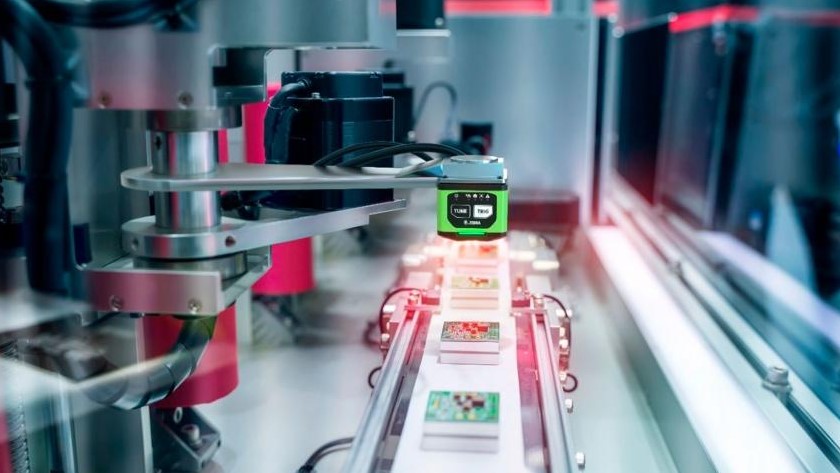
When a process moves outside an acceptable range, the control system can automatically adjust the process or alert an operator. Machine vision technology has also become increasingly important in automated quality inspection. Cameras and vision software can inspect products for defects, incorrect dimensions, missing components, surface problems, or assembly errors. Automated inspection can be particularly useful in high-volume manufacturing where manually inspecting every product would be time-consuming and difficult to maintain consistently. The result can be improved production consistency and earlier detection of quality problems.
Automation also makes it easier to record production information. Manufacturers can collect data about production quantities, machine conditions, alarms, defects, and process parameters. This information can then be analyzed to identify recurring quality problems and improve production processes.
Unexpected equipment failure can be extremely costly for manufacturers. A single failed PLC, VFD, servo drive, motor, sensor, or communication component can stop an entire production line. Industrial automation is helping manufacturers move from purely reactive maintenance toward more proactive maintenance strategies. Traditional reactive maintenance generally involves repairing equipment after a failure occurs. Preventive maintenance, on the other hand, involves servicing equipment according to a planned schedule. Predictive maintenance goes further by using equipment condition and operating data to identify potential problems before a serious failure occurs. Sensors can monitor parameters such as vibration, temperature, pressure, current, and operating hours. Automation systems can collect this information and identify abnormal conditions.
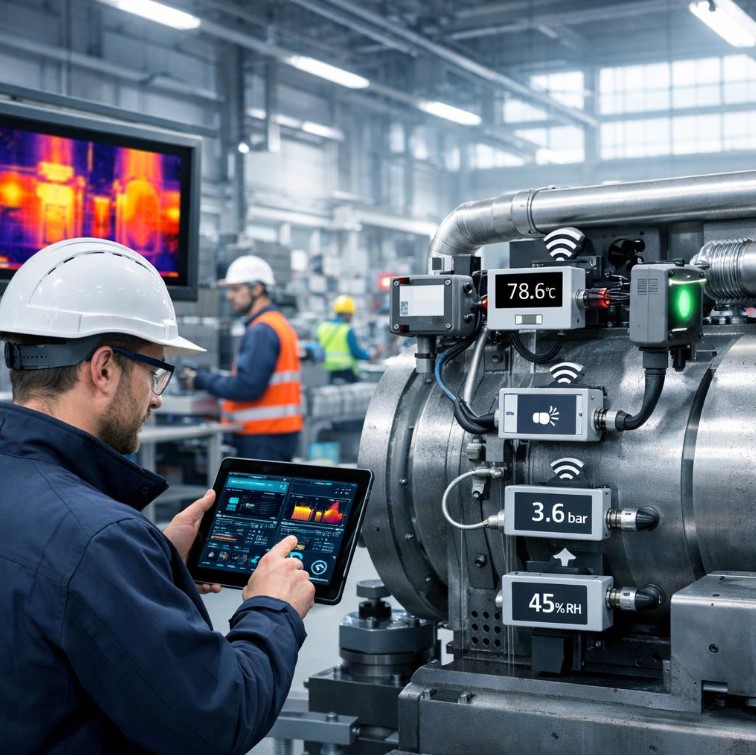
For example, an increase in motor temperature or vibration could indicate a developing mechanical or electrical problem. Maintenance teams can investigate the issue before the equipment experiences a major failure. Automation systems can also provide diagnostic information when a fault occurs. Instead of simply showing that a machine has stopped, an HMI or monitoring system may display the specific alarm or operating condition that caused the shutdown. This can reduce troubleshooting time and help maintenance teams restore production more quickly. For factories operating older equipment, another important issue is the availability of replacement components. As automation technology develops, some PLCs, drives, HMIs, and other components eventually become obsolete or discontinued. Maintaining an inventory strategy for critical components and identifying suitable replacement options can therefore become an important part of production reliability.
Industrial automation is increasingly moving beyond individual machines toward connected manufacturing systems. Industrial Internet of Things technology allows machines, sensors, controllers, and other industrial devices to exchange information across networks. Instead of operating as isolated systems, production equipment can become part of a connected industrial environment. For example, production data from PLCs and sensors can be collected by higher-level monitoring systems. Managers and engineers can use this information to understand production performance, machine utilization, energy consumption, downtime, and quality. Real-time information can support faster decision-making.
A connected manufacturing system can provide information such as:
Current production status
Machine operating conditions
Production output
Alarm history
Energy consumption
Equipment performance
Maintenance information
Product quality data
This connectivity is one of the foundations of smart manufacturing.
Cloud computing and edge computing are also contributing to this transformation. Depending on the application, production data can be processed locally at the machine level, at an edge device, or through cloud-based platforms. However, increased connectivity also creates new requirements. Manufacturers need to consider industrial cybersecurity, network architecture, access control, data protection, and system reliability when connecting industrial equipment.
Energy efficiency has become an important consideration for manufacturers because energy costs can have a significant impact on production expenses. Industrial automation can help manufacturers optimize how machines consume energy. Variable Frequency Drives are one example. Instead of operating motors continuously at a fixed speed, a VFD can adjust motor speed according to process requirements. In applications such as pumps, fans, conveyors, and compressors, controlling motor speed can help reduce unnecessary energy consumption.
Automation systems can also identify inefficient operating conditions. By monitoring energy consumption alongside production data, manufacturers can identify machines or processes that consume more energy than expected. Automated control can also reduce material waste. Precise control over temperature, pressure, speed, position, and other parameters can help maintain production within desired specifications. For manufacturers working toward sustainability targets, automation can therefore support several objectives:
Improved energy management
Reduced material waste
Better production efficiency
More accurate process control
Reduced unnecessary machine operation
Improved resource utilization
Automation itself is not automatically sustainable, but well-designed automation systems can provide manufacturers with better control and information for improving resource efficiency.
Industrial automation can also contribute to safer manufacturing environments. Some industrial processes involve high temperatures, heavy machinery, hazardous materials, high-speed movement, or other risks. Automation can reduce the need for workers to perform certain dangerous or repetitive operations directly. Industrial robots, for example, can perform tasks involving repetitive lifting, welding, material handling, or other operations where exposure to certain hazards needs to be controlled. Safety-related automation systems can also monitor machine conditions and initiate emergency actions when unsafe conditions are detected.
Safety sensors, emergency stop systems, interlocks, safety PLCs, and other technologies can be integrated into machine safety architectures. The objective is not simply to replace workers with machines. In many applications, automation changes the way people interact with production systems, allowing employees to focus more on monitoring, maintenance, programming, quality control, and higher-value activities. Proper risk assessment, machine design, safety standards, and employee training remain essential regardless of the level of automation.
Several automation components form the foundation of many modern manufacturing systems.
PLCs are widely used to control industrial machines and processes. They receive inputs from sensors and other devices, execute programmed logic, and control outputs connected to motors, valves, actuators, and other equipment. Their reliability, flexibility, and ability to operate in industrial environments have made PLCs a fundamental technology in factory automation.
HMIs provide an interface between operators and machines. Through an HMI, operators can monitor process information, change settings, view alarms, start or stop equipment, and analyze operating conditions. Modern HMIs can provide increasingly detailed graphical information and can connect with multiple automation devices.
Variable Frequency Drives control the speed and torque of AC motors. They are commonly used in pumps, fans, conveyors, compressors, production machinery, and many other applications. By controlling motor speed according to process requirements, VFDs can provide both process-control and energy-management benefits.
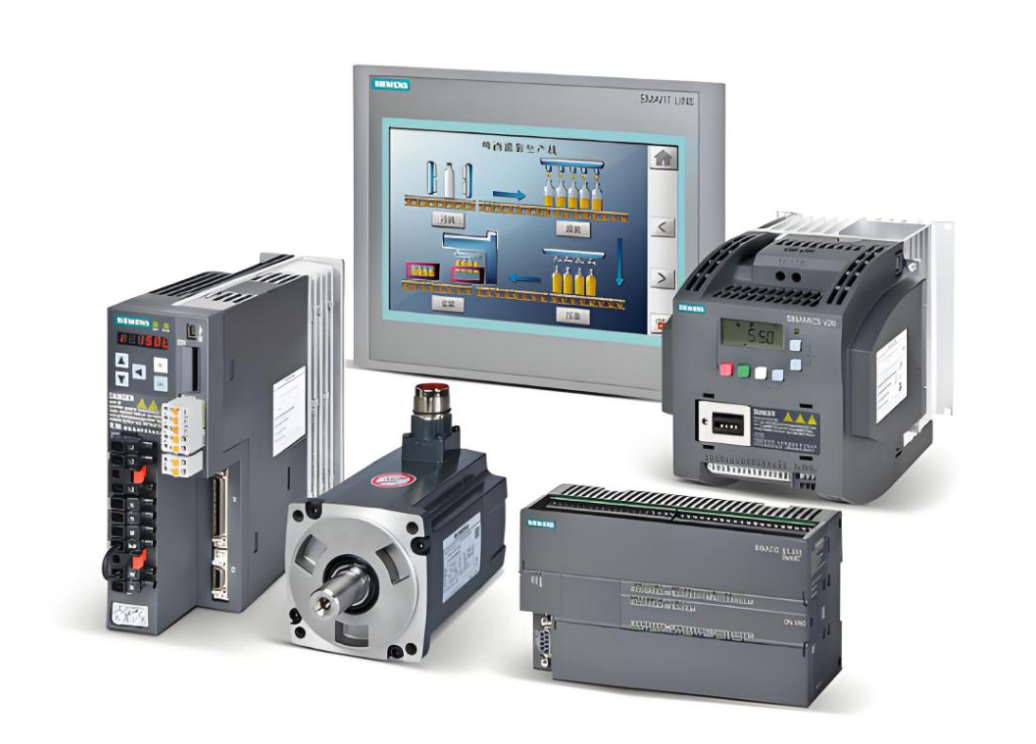
Servo drives and motors are designed for applications requiring accurate speed, torque, and position control. They are widely used in packaging machinery, robotics, CNC equipment, material handling systems, and high-speed production equipment. Together, these technologies create a coordinated control environment capable of managing complex industrial processes.
Although automation offers many potential benefits, implementing an automation system requires careful planning. The initial investment can be significant, particularly when upgrading an entire production line. Manufacturers may need to invest in new controllers, drives, motors, sensors, networking equipment, software, engineering, installation, and employee training. Integration with existing equipment can also be challenging. Many factories operate a mixture of modern and legacy automation systems. Replacing everything at once may not be practical or financially efficient. Instead, manufacturers may choose a phased modernization strategy. Critical components can be upgraded first while existing equipment continues to operate where appropriate.
Another challenge is technical expertise. Automated systems require engineers, programmers, electricians, maintenance personnel, and technicians who understand the equipment and control architecture. Cybersecurity is also becoming increasingly important as factories become more connected. Industrial networks need appropriate security controls to reduce the risk of unauthorized access and operational disruption. For these reasons, successful automation projects require more than simply purchasing equipment. They require appropriate engineering, system planning, maintenance strategies, and long-term support.
The next stage of industrial automation is likely to involve greater integration between automation equipment, data systems, artificial intelligence, robotics, and advanced analytics. Artificial intelligence can help manufacturers analyze large amounts of production data and identify patterns that may not be immediately obvious to human operators. Machine vision systems are becoming increasingly capable of performing automated inspection and recognition tasks. Collaborative robots, often called cobots, are designed to work in environments where humans and robots share certain tasks. They are expanding automation possibilities for applications where traditional industrial robots may not be practical.
Digital twin technology is another developing area. A digital twin can represent a physical machine, production line, or process digitally, allowing engineers to analyze and simulate different operating conditions. Edge computing can also enable faster processing of industrial data closer to the machines that generate it. Together, these technologies are moving industrial automation toward more intelligent, connected, and adaptable manufacturing systems.
Industrial automation is transforming manufacturing by changing how machines operate, how production data is collected, how maintenance is performed, and how companies manage quality, efficiency, and resources. PLCs, HMIs, VFDs, servo systems, sensors, robotics, machine vision, industrial networking, and IIoT technologies are becoming increasingly interconnected. Rather than functioning as isolated components, they can work together as part of a broader automation ecosystem. For manufacturers, the goal of automation is not simply to install more technology. The real value comes from using the right technology to solve specific production challenges—whether that means improving machine reliability, increasing production efficiency, reducing downtime, improving quality, controlling energy consumption, or modernizing aging equipment.
As manufacturing continues to evolve, automation will remain an important part of industrial development. Companies that carefully evaluate their existing systems, identify areas for improvement, and adopt appropriate technologies can build more efficient and flexible production environments. For businesses working with industrial automation equipment, reliable sourcing is also an important part of maintaining production continuity. Access to PLCs, HMIs, VFDs, servo systems, sensors, and other automation components can help maintenance and engineering teams respond more effectively when equipment needs to be repaired, replaced, or upgraded.
FF Automation supports industrial customers with automation components from major brands, including Siemens, ABB, Schneider Electric, Allen-Bradley, Mitsubishi Electric, Omron, Delta, SICK, Balluff, and others. Our product range covers new and tested refurbished automation components for different industrial applications.Whether a manufacturer is upgrading an existing control system, maintaining legacy equipment, or looking for a replacement component, having a dependable automation supply source can be an important part of maintaining production continuity. The future of manufacturing will continue to evolve, but one thing is clear: industrial automation is becoming an increasingly important foundation for efficient, connected, and flexible production.